Five identical containers on the counter Sunday afternoon. Chicken, potatoes, broccoli, portioned out and stacked in the fridge, ready to grab all week. Monday it's great: reheated in two minutes, done. Tuesday, still fine. By Wednesday, repetition fatigue sets in: the food hasn't gone bad, it isn't any more work to eat than it was Monday, it just doesn't taste as good the third time in a row as it did the first. By Friday, faced with container number five, the fridge loses to a pizza order, and the whole project quietly gets filed under "meal prep isn't the fix it was supposed to be."
Why the container method actually falls apart
It's not an effort problem. If anything, five plates already prepped and ready to reheat is about as low-effort as dinner gets. No decisions, no cooking, nothing gets harder as the week goes on.
The real problem is that nobody's appetite, taste, or mood is the same every day. What sounded good Monday can feel exhausting by Wednesday or Thursday, and convenience doesn't fix that. The exact same flavour, four or five days running, wears out its welcome regardless of how easy it is to reheat. Rigid meal prep solves for time and skips the part where you still have to want to enjoy eating.
Most plans are a calendar. Yours can be a chain.
Look at how most meal planning actually gets structured, whether it's an app or a sheet of paper on the fridge: Monday gets a recipe, Tuesday gets a different recipe, Wednesday another, and so on. It's a calendar. Five slots, five separate decisions, five separate cooking sessions.
Some tools let you manually copy Monday's dinner into Wednesday's slot too, which helps a little, but that's still you doing the planning by hand, one meal at a time. The structure underneath hasn't changed. It's still a calendar with a repeat button.
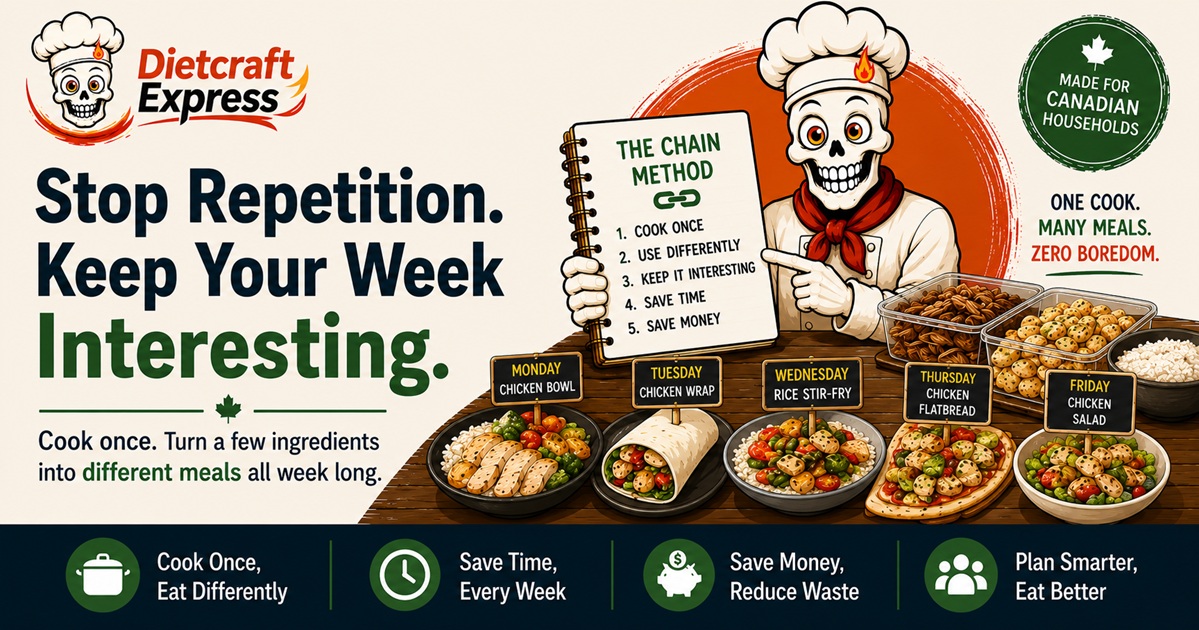
A chain works differently. A meal-planning calendar assigns a different recipe to each day; a chain builds every day from one shared cook session. Cook the protein(s) once, and Monday through Friday all draw from it in different forms. That's not a bigger version of a calendar. It's a different shape entirely, and it's the shape that solves for variety instead of just convenience.
Cook the ingredients, not the meals
The households that make this work aren't cooking five identical meals. Nor are they doing one big cook day with the intent of creating one huge meal from a single recipe, then dividing it up multiple times for the week, ultimately creating repetition.
They're cooking a few components, then turning them into meals that actually taste different from each other.
A whole roast chicken and rack of ribs on Sunday become a classic comfort chicken plate Monday, a chicken/corn grain bowl Tuesday, rack of ribs with slaw Wednesday, rib meat loaded flatbread Thursday, and finish the week with herb chicken wraps, all varied and delicious with minimal prep each day. It's the same idea behind stretching one bird across a full week, just built into a repeatable system instead of a single week's trick. Ground beef does the same job across tacos and a pasta sauce. A slow-cooked pork shoulder covers sandwiches one night and rice bowls the next. Toss half the cooked protein into the freezer on Sunday night, then pull it to the fridge Wednesday morning to safely thaw so it's ready to go again.
Several meals get built from the prep. It was never meant to be a meal on its own.
What a realistic prep session actually looks like
Pick one or two proteins and cook them properly, whatever holds up in the fridge for a few days: roasted, slow-cooked, braised. Add a starch that reheats well: rice, roasted potatoes, a pot of pasta. Round it out with vegetables simple enough to go more than one direction, roasted or just washed and cut, ready for whatever the night needs.
That's the whole session. Under two hours, not a lost Sunday. This does cost a few more minutes a night than reheating an identical plate would. Assembling a wrap or tossing together a stir-fry takes a bit longer than the microwave does. But it's still combining, reheating and plating, not an hour of from-scratch cooking, and what those handful of minutes buy is a dinner that's actually different from the one two nights ago.
You don't need to become a meal-prep person. You just need to stop cooking finished meals and start cooking ingredients. That's the difference between food you're still glad to eat by Thursday and food you're just getting through.
One cook session, a week of different dinners
Dietcraft Express builds a batch plan and bulk grocery list around your household — free, no account needed.
Try the free planner →